The short answer
- A display piece, prototype or desk item that stays indoors: PLA
- Something that lives outside or takes a load: PETG
- A part near heat, in a car, or one you plan to paint: ABS
- A part that has to bend, grip or cushion: TPU
- Fine detail: faces, miniatures, badges: Resin
Side by side
| Material | Strength | Heat | Flexibility | Detail | Outdoors | Cost |
|---|---|---|---|---|---|---|
| PLA | Good | Low | Stiff | Good | Poor | $ |
| PETG | Very good | Medium | Slight give | Good | Good | $ |
| ABS | Very good | High | Slight give | Good | Fair | $$ |
| TPU | Very good | Medium | Flexible | Fair | Good | $$ |
| Standard resin | Fair | Low | Stiff | Excellent | Poor | $$$ |
Cost runs from $ (cheapest) to $$$. The ratings are for the way we print each material; a different printer or setting can move them a little either way.
Filament or resin?
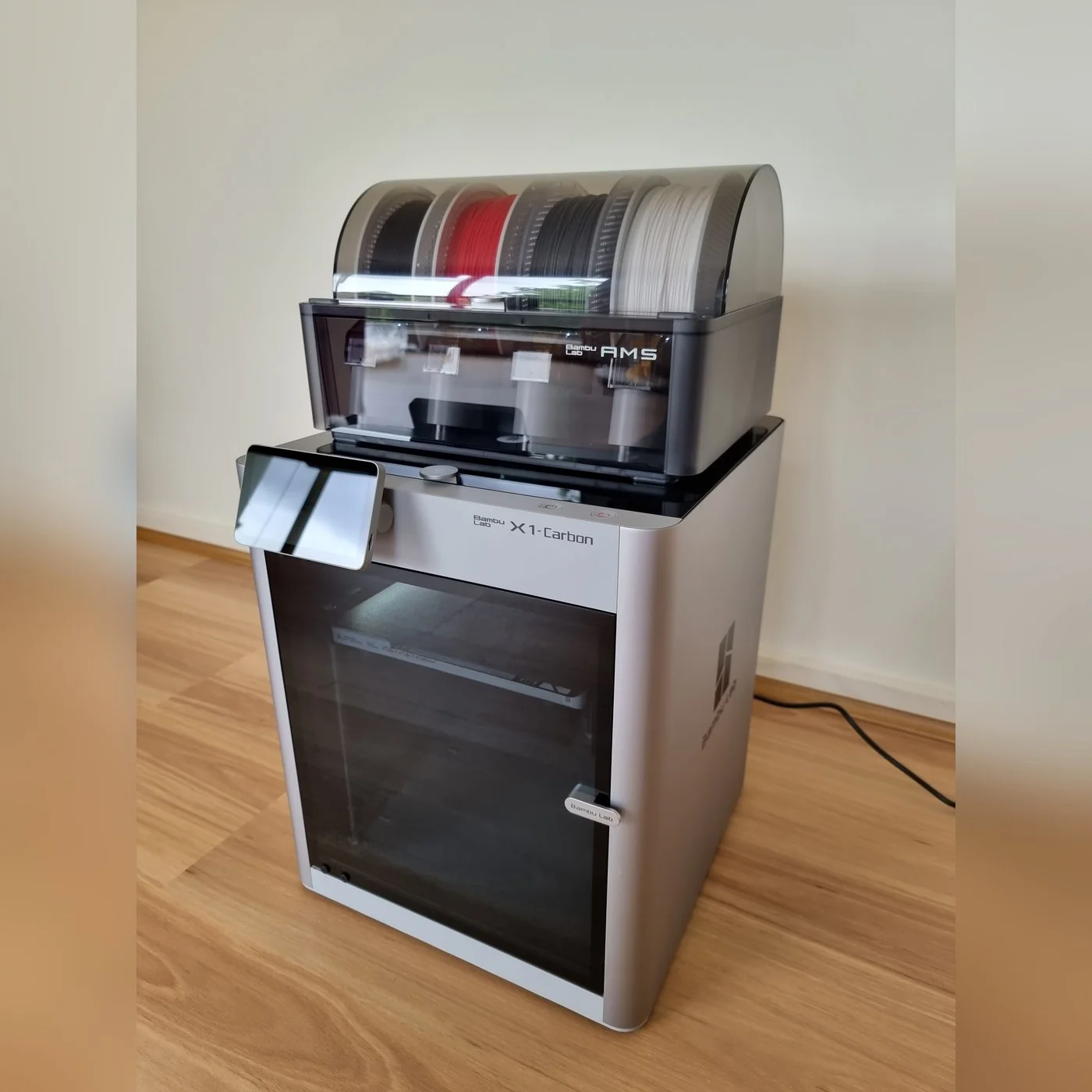
Filament printing builds a part from lines of melted plastic, layer on layer. It is strong and quick, handles large parts, and leaves layer lines you can see and feel. PLA, PETG, ABS and TPU are all filaments.
Resin printing cures liquid resin with light, one very thin layer at a time. Our resin layers are about four times finer than our filament ones, so faces, folds and lettering come out crisp. The trade is that standard resin is harder but more brittle, and it does not like sunlight.
Each material in detail
PLA
Filament printing. Good for display pieces, prototypes, desk items and props that stay indoors. Cost: $.
- Strength: Good. Stiff, but can crack if dropped or bent hard.
- Heat: Low. Softens around 130°F, so not for a hot car.
- Flexibility: Stiff. Almost no give.
- Detail: Good. Clean edges, fine layer lines.
- Outdoors: Poor. Sun and heat warp it over time.
PETG
Filament printing. Good for brackets, mounts, clips, planters and parts that live outside. Cost: $.
- Strength: Very good. Tougher than PLA and less likely to snap.
- Heat: Medium. Holds its shape to about 160°F.
- Flexibility: Slight give. Bends a little before it breaks.
- Detail: Good. Slightly glossier, softer edges than PLA.
- Outdoors: Good. Handles sun and rain well.
ABS
Filament printing. Good for car interior parts, enclosures, parts near heat, and pieces you plan to paint. Cost: $$.
- Strength: Very good. Takes knocks and impacts well.
- Heat: High. Holds its shape to about 200°F.
- Flexibility: Slight give. Bends a little before it breaks.
- Detail: Good. Sands and paints nicely.
- Outdoors: Fair. Can fade or yellow in strong sun unless painted.
TPU
Filament printing. Good for bumpers, gaskets, grips, feet, straps and protective covers. Cost: $$.
- Strength: Very good. Squashes and springs back instead of cracking.
- Heat: Medium. Fine for everyday warmth.
- Flexibility: Flexible. Rubbery, like a phone case.
- Detail: Fair. Small, sharp features come out softened.
- Outdoors: Good. Copes with sun and weather.
Standard resin
Resin printing. Good for miniatures, figures, faces, badges and small detailed display pieces. Cost: $$$.
- Strength: Fair. Hard, but thin parts can snap.
- Heat: Low. Can soften or warp in a hot car.
- Flexibility: Stiff. Brittle rather than bendy.
- Detail: Excellent. The finest detail and smoothest surface we print.
- Outdoors: Poor. Sunlight makes it yellow and brittle.
Mistakes we see most
- PLA in a hot car. It softens at around 130°F, so a dashboard mount or a phone holder can sag in a single summer afternoon. Use ABS or PETG.
- Resin left in the sun. Sunlight makes standard resin yellow and brittle. Keep resin pieces indoors, or have them primed and painted.
- Tiny sharp detail in TPU. Flexible filament softens small features. If a part needs both flex and detail, it may need to be two parts.
- Picking by looks alone. Say what the part has to survive, not just what it should look like, and the right material usually picks itself.